August 27th, 2025 / 3rd of Elul 5785
Man has a need for tzniyus [modesty]. It’s a part of our nature, and this applies to both men and women, as the Prophet Micha instructed us (Michah 6:8): “What does Hashem [G-d] ask of you? Only to do judgment, love kindness, and walk with tzniyus before our G-d.” We are not animals — they don’t have a command to be tzanua [modest] because they don’t have chachma [wisdom]. Orchos Tzaddikim [Ways of the Righteous] teaches us that you won’t find a wise person who does not have a sense of embarrassment. Daas [knowledge] and busha [shame] go together. One who has busha has daas. One who does not have busha — this shows that he lacks daas.
He explains further: What was the Etz HaDaas [Tree of Knowledge] in the Garden of Eden? After Adam and Chava [Eve] ate, they now knew about tov v’ra [good and evil], their eyes were opened and they had tremendous busha before Hashem. It wasn’t the sin that embarrassed them, because then the Torah would not add that their eyes were opened, and it wasn’t that they were naked, as Rashi explains — even blind people know that they are naked. Busha comes from intelligence, from knowing tov v’ra, and the animals don’t have busha.
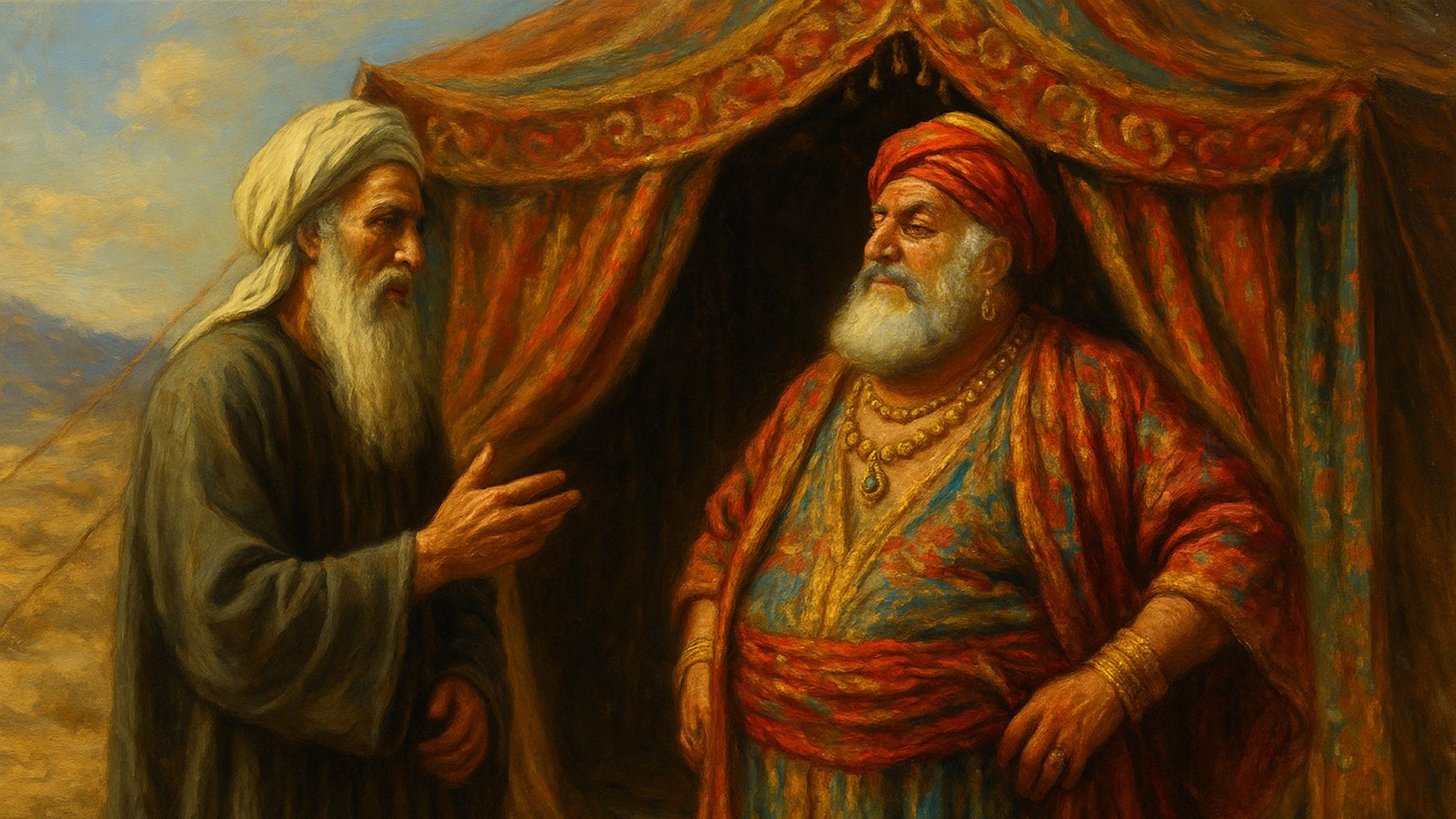
Sara Imeinu [Our Matriarch Sarah], who was a very private, tzanua woman, had the role of announcing Hashem’s miracles for the Jewish people to the world, which all started with the birth of her son, Yitzchak [Isaac]. According to the Midrash [Rabbinic commentary], her husband, Avraham Avinu [Our Forefather Abraham], told her that now is the time to remove your modesty, your personal privacy, your sense of busha [shame].
Although she was generally “inside the tent,” hidden from view, all the other women came at that time and brought their babies with them, all hungry and crying, and Avraham Avinu said to Sara that she must act in a way that went against busha and tzniyus. She publicly nursed the other babies as proof that she had truly given birth, declaring the miracle of her bearing a child at such an old age, and she did so wholeheartedly.
Sara Imeinu had a highly developed sense of tzniyus, and yet when she was commanded, she understood what her role was and did it. True tzniyus goes beyond our rules and regulations. If we think about what Sara Imeinu did, we might say she lost some of her emotional sense of tzniyus at that moment, but, in fact, she gained a much higher level of tzniyus and she gained more yiras Shamayim [fear of Heaven]. She said, “I will absorb the busha [shame] that I feel because I know that my public declaration will cause an increase of yiras Shamayim.”
Orchos Tzaddikim writes further that the Targum [Aramaic translation of the Torah] refers to the bird called “chasida” as “chavrita,” which means “white.” Even if Sara Imeinu turned white from busha, she did not hesitate to do the right thing. Who is a “chassid?” At the root of chassidus [piety] is busha. When a person’s actions are done with sensitivity to right or wrong, this makes them a chassid.
We should also note, in light of the Targum, that a chassid is someone who feels a need to mend and ever perfect his ways, to whiten himself, in order to do the mitzvos [commandments] properly. Sara Imeinu reached the level of prophecy before she met Avraham Avinu [Our Forefather Abraham], when she was called Yiska [whose Hebrew root denotes seeing]. The verse in Tehillim [Psalms] (89:20), “Then You spoke in prophecy to Your chassidim [pious ones],” refers to Sara Imeinu.
It states as well (Shemos / Exodus 20:17): “In order that His fear will be upon your face that you will not sin.” Busha, which can be seen on a person’s face, brings fear of Heaven and humility and even prophecy. A chassid means someone who goes beyond the call of duty; yiras Shamayim is so important to them that they allow their face to turn white. They absorb being white and embarrassed in order to do the mitzvos.
It is impossible to say that Sara Imeinu could throw off her modesty and her inner sense of busha when faced with the necessity of what she had to do. On the contrary, she was overwhelmed and white with embarrassment, and at the same time she had the sensitivity to wholeheartedly nurse all those babies, proclaiming G-d’s miracles. That was a quality of chassidus and even tzniyus.
The mind has about a thousand billion cells — I do not really know how many — but it is a machine that knows right and wrong, and as part of our essence this translates into a sense of embarrassment. How does a Jew come to do teshuvah? It starts with embarrassment. Inside, he feels that something is not in order in his life. The machinery is not working properly, and this causes him embarrassment. A light of sensitivity is kindled and begins motivating him to change.
But our modern society works very powerfully against this. The western world has lost any sense of right and wrong. Tzniyus is gone. Years ago, a divorce was still considered a terrible thing. Today, it’s the “in thing.” So what about us? We must get to the core of knowing tov v’ra [good and evil], and together with yiras Shamayim, to rediscover the quality of tzniyus within ourselves.
Yaakov Avinu [Our Forefather Jacob] provides another example of how tzniyus and busha work, but the meforshim [commentators] struggle with it. You know the story — Yaakov has to get married so he leaves his father and runs from his brother who wanted to kill him. He goes to his mother’s family, but he has no money.
Right away he sees Rachel [Rachel], says to her: “Can I help you,” and then pushes away the stone and helps her give water to the sheep. Lavan [Laban] sees that Yaakov is a good worker and lets him stay. Yaakov works for him seven years, and then fourteen years for the women and for his children. Yaakov is working now after the seventh year and a strange thing takes place — he now wants Rachel, and Yaakov demands of Lavan: “My days of work are finished, now bring me my wife so I can have children from her” (Bereishis / Genesis 29:21). If you know Hebrew, you know what he said — it is hard to repeat it.
Rashi asks: The simplest and coarsest of men don’t speak this way! Such an uncouth expression, it is not nice — and from Yaakov Avinu [Our Forefather Jacob]? Where is his busha?
Rashi answers that Yaakov Avinu was utterly intent on raising up the 12 Tribes that he knew he was destined to bring into the world, and if not now — when?
Rabbi Avraham of Sokotchov (author of Iglei Tal and many halachic teshuvos [responsa]) writes that Rashi’s explanation is, on the face of it, entirely unsatisfactory. Even if Yaakov Avinu’s intentions were pure in the highest degree, we would certainly expect that he express himself with the utmost sensitivity and tzniyus.
Rabbi Avraham of Sokotchov adds that even Rashi’s original difficulty is not easily understood. Such coarseness has nothing to do with who Yaakov Avinu really was. He related to the mitzvah of being fruitful and multiplying just as he did to the mitzvos of tallis [prayer shawl] and tefillin [phylacteries]. He was like Adam HaRishon [the First Man] before he sinned, and procreation was a chefza shel mitzvah [object of a commandment] so that that limb of the body was no different than any other, and the act of fulfilling the mitzvah was no different than putting on tallis or tefillin. To him, everything translated into yiras Shamayim.
Still, didn’t Yaakov Avinu know that among other people, physical desire for this act dominates their thinking, even though this was not the case for himself? If so, the requirements of tzniyus [modesty] should prevent him from speaking in such a way, and we would not expect to hear from Yaakov Avinu words so absolutely foreign to the idea of tzniyus in the eyes of the world.
Rabbi Avraham of Sokotchov tells us a huge chiddush [novel insight] in order to understand Rashi more deeply: We come from Yaakov Avinu, who was an ish emes [man of truth], and the Jewish people are called zera emes [seed of truth].
When Yaakov came to raise up the 12 Tribes, he had to announce the truth. For him, declaring that the time had come to live with his wife was a pure, direct statement — like that of a child, who is not embarrassed to say something open and revealing, even though it is very uncomfortable for the adults who hear him.
Rabbi Avraham of Sokotchov writes that in order to implant the trait of emes in his sons forever, it was impossible for Yaakov to speak any other way, as it states: “Give emes unto Yaakov” (Micha 7:20). The very essence of Yaakov Avinu was that his inner and outer selves were one and the same.
Rabbi Avraham of Sokotchov adds that by speaking the truth, Yaakov Avinu [Our Forefather Jacob] also outsmarted the wicked Lavan [Laban]. Lavan’s true intention was to fight against Yaakov Avinu’s kedushah [holiness], and when he saw that Yaakov was totally unaffected by the years in Lavan’s house, he had no intention of giving him his daughter, Rachel.
But when Yaakov said what he said, Lavan changed his mind — “Maybe I accomplished something after all,” he thought. Of course, Yaakov Avinu could never utter such base and coarse words in order to fool Lavan, but he knew very well that when he spoke the truth, Lavan would never understand him.
We also cannot imagine the opposite — that Yaakov would speak in a polite and superficially proper way without being true to his inner being. Modifying his words would cause a permanent lacking in the zera emes that came from him, and because he spoke the truth, and did so for the sake of the Jewish people destined to come from him, his words concerning this particular mitzvah [commandment] actually meet the highest standard of tzniyus.
How far we are from true tzniyus! For us, this whole sugya [topic] takes on a different form. We come from the western world, where people think nothing of eating in the street. This should be embarrassing! After all, we are a tzelem Elokim [image of G-d]. That is why the people of Jerusalem were known to be careful with whom they would eat.
And for Jews, such behavior actually renders their testimony invalid in beis din [rabbinical court]. In the culture we come from, such an idea is unimaginable. Eating in public should invalidate one’s testimony in beis din? In America, it’s perfectly accepted, normal, and even healthy. On the contrary — keeping one’s taavah [desire] in check is considered unhealthy. They say, “Let yourself go,” “don’t suppress the real you — it will make you sick” — so they think.
The western world has lost the concept of tzniyus and sense of embarrassment, and we are exposed to this behavior everywhere.
Years ago, there used to be a joke, which was based on a true occurrence. This was in my mother’s time. In Boston, a “nude swimming club” opened up, and many people felt, how can we tolerate such an evil practice going on in our midst, even if it is not happening right before our eyes?
A court case was brought against this club, but the judge said to the claimant: “You live so far away — more than five miles — can you actually see any of this club’s offensive behavior?”
“No,” he answered, “but by looking with binoculars it is possible to see this club at their swimming…”
That was the punch line of the joke, and indeed, the judge laughed and declared: “Case dismissed.” In the name of “openness,” coarse and insensitive behavior dominates our world, and it is inevitable that we are affected by it.
When did the fall of the Roman Empire begin? Or that of the Aztecs or any ancient people? It began when their values began to decline. Israeli values are zilch. They cheat and steal, there are no rules, they’re the hardest type of people — no sensitivity, no busha.
The world expects us to be G-d’s people and be holy, ethical, moral, and just, and what are we? How do they speak in the Knesset? It’s like a circus! But we who are religious, at least we should have busha. We have to be real, and not lose our sense of right and wrong. We are embarrassed by what goes on in the State of Israel. For this we waited 2,000 years?
What you can do is work to change it: come here and make a better society, raise children in the proper way, with tzniyus [modesty] built on yiras Shamayim. You can’t change others, but make the start with yourself.
What is your son’s picture of yiras Shamayim? To please his parents by learning Torah [the Five Books of Moses and Jewish teaching] and being in a yeshiva [academy of Torah study]? What about self-control and decent, proper living? What about doing chessed [acts of kindness] when it is difficult for you? Do we say “it’s too much,” or “I don’t feel like doing it”?
In summary, animals have no daas or busha; they act out of instinct. Human beings know tov v’ra [good and evil]; there is that little voice inside that says, “No! No! That’s just not right!” Sensitivity to that inner feeling brings busha — even in a Goy [non-Jew], and I don’t mean embarrassment from other people. Human beings are social animals, but the breakdown of social norms can help a person to silence his knowledge of tov v’ra and conduct himself like an animal with no busha at all.
Once, when I was in America, I met a young Jewish man, a sailor, and I talked to him. I didn’t think that it went anywhere — he said that he was not able to deal with Shabbos [Sabbath], but Hashem blessed me to have influence. Years later I met him again, a frum [observant] man with a family, and he told me that he was married to the daughter of Professor Hutchenson from the University of Chicago.
You don’t know who that is, but he was a very famous educator who founded the program of the Great Books of the Western World — a highly cultured and intelligent man, a Goy [non-Jew], and his daughter was a frum Jew. He had a very large foundation for world peace, and I asked his daughter to arrange an appointment for me, which she did. Professor Hutchenson was pleasant and helpful, but he said to me that he had such embarrassment from his daughter.
“How could she do it — we are culturally so advanced, and she chose to be so backward and antiquated!” He had busha [shame] to the core, and the idea of a Jew just did not compute.
A Jew is different. We have to be sensitive, G-d fearing; we must have the trait of tov v’ra [good and evil] and also walk with tzniyus [modesty] before Hashem. That is the deeper message that we learn from the Avos [Forefathers].
Let’s go back to the idea of Yaakov Avinu, the ish emes [man of truth]. In the Gemara (Ta’anis 26b), Rabbi Shimon ben Gamliel said: “The Jewish people had no better days than the 15th of Av and Yom Kippur.”
On Yom Kippur we regained Hashem’s favor. He forgave us for the sin of the Golden Calf and gave Moshe [Moses] the second luchos [tablets] of the Ten Commandments. On the 15th of Av, girls of marriageable age had a tradition of going out to the fields, where each would declare her good points and say: “Young man, look up and see what you will choose for yourself!” In that way, many shidduchim [marriage matches] were made.
What does Yom Kippur have to do with the 15th of Av? How could these two events be put together? To understand the connection, we must recall that Yaakov Avinu was the ish emes [man of truth], and as the Gemara states, he did not die.
The tradition of young maidens going out to the fields began after the tragedy of the Concubine of Giv’ah. After an immoral act was committed among the Tribe of Binyamin [Benjamin], the rest of Klal Yisrael [the Jewish People] waged war against that Tribe and vowed not to intermarry with them. After the war was over, it became clear to all that the Tribe of Binyamin now faced extinction. The Jews cried out to Hashem, praying that such a thing should not happen.
That is because each and every Tribe was an expression of a part of Yaakov Avinu. We had to make sure that Yaakov’s strength did not ebb, and that meant seeing to it that each Tribe would continue. The Sages devised a way in which shidduchim would simply emerge within Binyamin and prevail as a fait accompli, in order that the strength of Yaakov Avinu should not be lost. What was given then as a hora’as sha’ah [temporary directive] continued in the form of a tradition, lasting until the times of the Gemara.
This was an echo of Yaakov Avinu’s own words: “Give me my wife so I may live with her, and begin fathering the 12 Tribes.” This was Yaakov’s purpose; he needed these 12 Tribes. Each one has its own power, its own place in the zodiac.
Yaakov was talking l’Shem Shamayim [for the sake of Heaven], and so, too, the behavior of these maidens on the 15th of Av was l’Shem Shamayim. Because if, years down the road, there would no longer be a Tribe of Binyamin [Benjamin], this would take away from “giving truth to Yaakov.” Titein emes l’Yaakov [“Give truth to Jacob”] means that no Tribe could come to an end, chas v’shalom.
The sin of the Golden Calf also meant that the truth of Yaakov Avinu [Our Forefather Jacob] could end, chas v’shalom. So when Moshe Rabbeinu [Moses, our Teacher] brought down the second luchos [tablets] on Yom Kippur, that meant forgiveness and a new relationship with Hashem — this was also a part of “Titein emes l’Yaakov“.
Therefore, on Yom Kippur we are able to elevate ourselves l’Shem Shamayim [for the sake of Heaven] and be a part of the continuation of Yaakov’s nation in purity. The Satan has no right to interfere, and that is why our Sages tell us: we have no better days than Yom Kippur and the 15th of Av.
Excerpted with permission from Imrei Mordechai, Vol. 2, A Collection of Inspirational Insights from the “Mussar Shmoozes” of HaGaon Rabbi Mordechai Goldstein Ztzvk”l, The Imrei Mordechai Institute, Diaspora Yeshiva Toras Yisrael, Mount Zion, Jerusalem, Kislev 5779.

Share This!
From beginner to advanced, if you’re a Jewish man, 18 to 35 years of age, and you’re ready to give your heart to HaShem, and to get serious about learning Torah, Diaspora Yeshiva has a place for you with us on Mount Zion, Jerusalem.
