They asked the Chazon Ish, ‘What is the greatest success a person can attain?’ He answered, ‘To go through life without harming another…’


They asked the Chazon Ish, ‘What is the greatest success a person can attain?’ He answered, ‘To go through life without harming another…’

‘What is the service of the heart? This is Tefillah [Prayer].’ What, then, is the problem if our prayers are not being answered?
The instructions that must be followed to acquire the Torah, the inherent difficulties, and the ultimate satisfaction.

The Rosh Yeshiva gives over the case of two big Rosh Yeshivas, one bigger than the other, but a fundamental difference between them that made one of them wicked, even though he was a tremendous talmid chacham.
A powerful discussion on preparing for Shavuos, including the real goal of the Jewish people and what it means to connect to the highest level through Ameilus HaMachshavah (Exertion of the Mind) in Torah Study, to the best way for a Jew to obtain his parnassa (livelihood), and this unlike the nations.
Two commandments with time-based promises of blessing and wealth—come and know the truth of HaShem!
“This is the way of the Yeitzer HaRa [Evil Inclination]: to entice a person with dimyon [imagination] and falsehood, with arguments based on nonsense.”
The Rosh Yeshiva discusses the sin of publicly desecrating the Name of HaShem and how it is atoned for
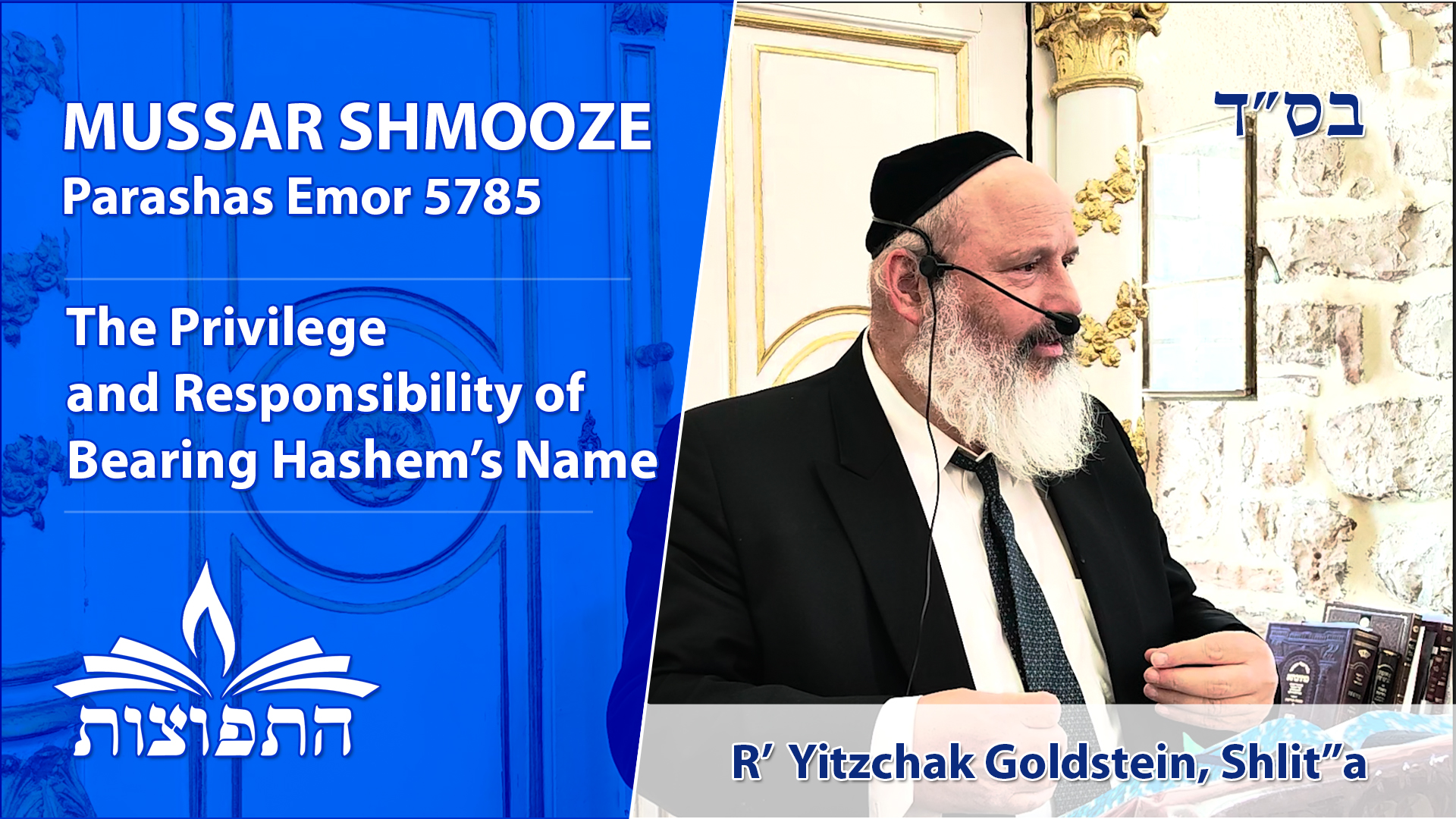
The Rosh Yeshiva discusses the prohibition in Parashas Emor that prohibits a kohein (priest), a son of Aharon (Aaron), with a physical defect from making offerings to HaShem in the Temple, together with related ideas about the importance of those who are associated with HaShem’s Torah presenting themselves well.

The Rosh Yeshiva discusses and explains a Daas Zekeinim on the significance of the location of the parashiyos (Torah portions) on Tzara’as (“leprosy”) in the Torah, between mentions of the sons of Aharon (“Aaron”) HaKohein (the High Priest)—a serious warning about pride and looking down on others.