24th of August, 2025 / 30th of Av, 5785
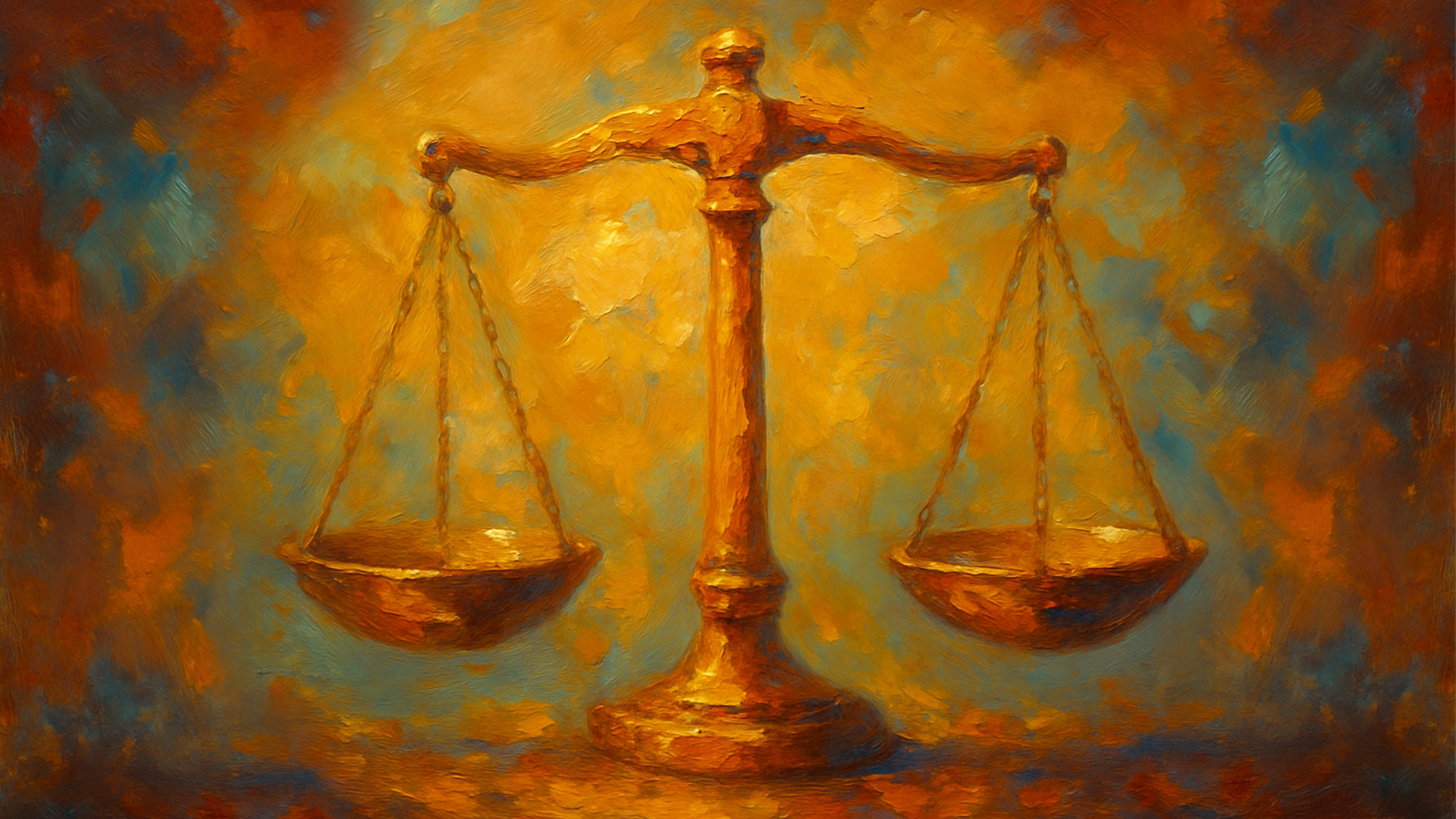
‘You will give judges and officers for you in all your gates that HaShem your G-d gives you, [according] to your tribes; and they will judge the people with righteous judgment”
– Devarim (Deuteronomy) 16:18
The teachers of ethics expounded allegorically:
A person must appoint for himself judges and officers in all his “gates,” that is, in the mouth, the eyes, and the ears, to guard himself from sin. At night, one should always make a cheshbon ha’nefesh [accounting of the soul], judging whether he behaved himself properly.
The accounting of the soul is a central principle in the life of a Jew, and it must be constant, as Chovos HaLevavos [Duties of the Heart, Gate 5] writes: ‘Accounting—a person is obligated in it always, with every spirit of his eye, and if he can, with all his breaths.’ And the Chassid [pious one] said, ‘Therefore, my brother, it is proper for you to accustom yourself to conduct this accounting with your soul at every hour and every moment, lest you be lost.’
In the book Kav HaYashar (Chapter 25) it is written that a person must make a Cheshbon HaNefesh every morning and evening, to plan the coming day together with the dawn, and to review the deeds done by the end of the day. And he brought in this matter the words of the holy Zohar (Book of Splendor, I:121a), that a person must guard himself from sins and not turn right or left.
And moreover, every day a person is judged—when a person lies down to sleep, two angels stand before him and record him for the day. If he merits, they request good for him, and if not, the angels accuse him. And about this it is said (Mishlei / Proverbs 4:25–26), ‘The eyelids of one’s eyes shall gaze; your steps will not be hindered.’ When those angels accompany him, they say, ‘Step firmly; do not stumble.’ Therefore, one must guard himself from sins throughout the entire day, and at night he must examine and scrutinize his heart, reviewing everything he did that day, in order that he may repent.
It follows, then, that there are two kinds of Cheshbon HaNefesh that a person must do: one is at the beginning of the day, in which he plans what he will do that day and prepares for the future; and the second is at the end of the day, in which he reviews what has already passed. And this is hinted at in the verse (Devarim 16:18), ‘You will give judges and officers for you.’ The judge is meant to review the past, while the officer is to prevent future misdeeds. So, too, must a person appoint for himself a judge in the evening to examine his deeds, and an officer in the morning to plan, so that his steps will be righteous, to judge the past and to guard the future.
How fitting are these words to our Parashah, as we enter the month of Elul, when repentance is revealed even more. And the ancients gave a sign for these days (Amos 3:8): ‘The lion has roared — who will not fear?’ The lion is an acronym: Elul, Rosh HaShanah [Head of the Year], Yom Kippur [Day of Atonement], and Hoshana Rabbah [Great Supplication]—who will not tremble from these days?
Rabbi Yisrael Salanter wrote (Ohr Yisrael, Letter 14), ‘Sudden awakenings come when, in my opinion, every person feels the echoes of the voice calling: Holy Elul.’ And if throughout the year it is a mitzvah for a person to make a Cheshbon HaNefesh and to examine his deeds, all the more so in the month of Elul, which is preparation for the great and awesome Yom HaDin (Day of Judgment).
And when a person accustoms himself to making a Cheshbon Hanefesh, not only does he awaken Divine mercy upon himself, but this also ensures that he will not stumble again at night. And this is the main tool for fear of Heaven, and fear of Heaven is the foundation of Judaism. As it is written (Devarim 10:12), ‘And now, Yisrael [Israel], what does HaShem your G-d ask of you, but to fear Him.’ And it is written (Tehillim / Psalms 111:10), ‘The beginning of wisdom is the fear of Hashem.’ And our Sages said (Pirkei Avos / Ethics of the Fathers 3:17), ‘If there is no wisdom, there is no fear of Heaven; if there is no fear of Heaven, there is no wisdom.’ They also said to their disciples, ‘Would that the fear of Heaven be upon you as the fear of flesh and blood.’
It is told in the Gemara [Talmud] (Berachos 28b) that when Rabbi Yochanan ben Zakkai’s students came to visit him on his deathbed, he said, ‘May it be His will that the fear of Heaven be upon you as the fear of flesh and blood.’ His disciples said to him, ‘Is that all?’ He answered, ‘If only it were so! Know that when a man sins, he says, ‘I hope no man sees me.’ And now, when they escort me before the King, the King of kings, the Holy One, blessed be He, Who lives and endures for eternity, if He grows angry with me, His anger is eternal; if He imprisons me, His imprisonment is eternal; if He puts me to death, His death is eternal. And I cannot appease Him with words, nor bribe Him with riches. And not only that, but I see before me two paths: one leading to Gan Eiden [The Garden of Eden], and the other to Geihinnom [Hell]; and I do not know on which path they will lead me. Should I not weep?’ The praises of Rabbi Yochanan ben Zakkai, who was complete in all parts of the Torah, and who raised many students.
It is taught (Sukkah 28a), ‘If all the Sages of Yisrael were on one side, and Rabbi Eliezer HaGadol [the Great] on the other, he would outweigh them all.’ And yet, it is said regarding Rabbi Eliezer (Sanhedrin 68a), ‘If all the seas were ink, and all the reeds quills, and all the heavens parchment, and all the people scribes, they would not suffice to write all the Torah I have learned, nor all the teachings I have received from my teachers.’ Still, Rabbi Eliezer declared, ‘I have not withheld anything, not from halachah [Jewish Law], nor from the laws of fine detail, nor from parables of foxes, nor from the discourse of ministers, nor from the conversations of angels, nor from the matters of demons, nor from the parables of washing troughs.’ And yet, with all this greatness, Rabbi Eliezer — who equalled them all — was still outweighed by Rabbi Yochanan ben Zakkai. And so too, Rabbi Yochanan ben Zakkai had many students, and the greatest of them was Rabbi Eliezer. And when Rabbi Eliezer passed away, Rabbi Akiva said, ‘Since the death of Rabbi Eliezer, the order of the Mishnah has been lost, and I have not had who to ask in depth.’
And when Rabbi Yochanan ben Zakkai passed away, they said, ‘The light of Israel, the right pillar, the mighty hammer, has been lost.’ Rabbi Akiva, who was his disciple, remembered that Moshe [Moses] said before the Holy One, blessed be He,
‘Master of the Universe, Rabbi Akiva is worthy to give the Torah to Yisrael!’ As it is said (Menachos 29b), ‘When Moshe ascended on high, he found the Holy One, blessed be He, sitting and attaching crowns to the letters [of the Torah].’ Moshe asked, ‘What is the need for these?’ He answered, ‘There will arise a man, Akiva ben Yoseif [son of Joseph], who will expound heaps upon heaps of halachos [laws] from each crown.’ And this was Rabbi Akiva, who later appeared in the upper chariot (Chagigah 14b). And so too, Rabbi Shimon bar Yochai said, ‘I am able to exempt the entire world from judgment’ (Sukkah 45b).’
Until what point was Rabbi Yochanan ben Zakkai considered exalted? When he lay on his deathbed, he said, ‘I see before me two paths: one leading to Gan Eiden, and one to Geihinnom, and I do not know on which they will lead me. Should I not weep?’
The Mesilas Yesharim [Path of the Just] (chapter 4) writes, ‘A person is worthy of trembling and fearing constantly, for he will one day stand in judgment before his Creator, when his deeds will be examined with utmost scrutiny, down to the smallest detail. And Hashem is exacting even with the righteous to the breadth of a hair.
Avraham [Abraham] — because he said (Bereishis / Genesis 15:8), ‘By what will I know?’, it was decreed, ‘Your descendants shall be strangers.’
Yaakov [Jacob] — because he said (Bereishis 31:27), ‘Why did you flee secretly?’, Rachel died prematurely.
Yoseif [Joseph] — because he said (Bereishis 40:14), ‘But remember me’, two years were added to his imprisonment.
David — because he called the words of Torah songs, he stumbled in the matter of Uziyah (Sotah 35a).
Michal — because she rebuked David for dancing before the Ark, she had no child until her death.
Chizkiyahu [Hezekiah] — because he showed the treasures of his house to the emissaries of Bavel [Babylon], it was decreed his sons would be eunuchs there.
Excerpted and translated from Hebrew into English from Yam HaTorah by Rabbi Yosef Goldstein, Rabbi and Mussar Lecturer at Diaspora Yeshiva Toras Yisrael, Mount Zion, Jerusalem.
Share This!
From beginner to advanced, if you’re a Jewish man, 18 to 35 years of age, and you’re ready to give your heart to HaShem, and to get serious about learning Torah, Diaspora Yeshiva has a place for you with us on Mount Zion, Jerusalem.
