July 3rd, 2025 / 7th of Tammuz, 5785
‘And the soul of the people became short-tempered on the way, and the people spoke against Elokim [G-d] and against Moshe [Moses]: why did You bring us up from Mitzrayim [Egypt] to die in the wilderness? For there is no bread and no water, and our soul loathes this despicable bread.’
– Bamidbar (Numbers) 21:5
On this, the Gemara [Talmud] (Avodah Zarah 5a) says, Moshe said to Yisrael [Israel]: ‘You are ingrates, children of ingrates,’ as it is written, ‘And our soul loathes this despicable bread.’
Rashi explains, ‘The mann [manna] was light, for it was absorbed into all their limbs and did not produce waste—therefore they called it ‘despicable’ and scorned it for that reason. Yet it was a great kindness that they did not need to go three parsa’ot [parasangs] to relieve themselves. ‘Children of ingrates’ refers to what is written (Bereishis / Genesis 3:12), ‘The woman whom You gave to be with me—she gave me from the tree and I ate.’
Rashi comments, ‘This is a derogatory expression, for he blamed the fault on the gift of the Makom [Omnipresent], though she had been given to him as an eizer [helper].
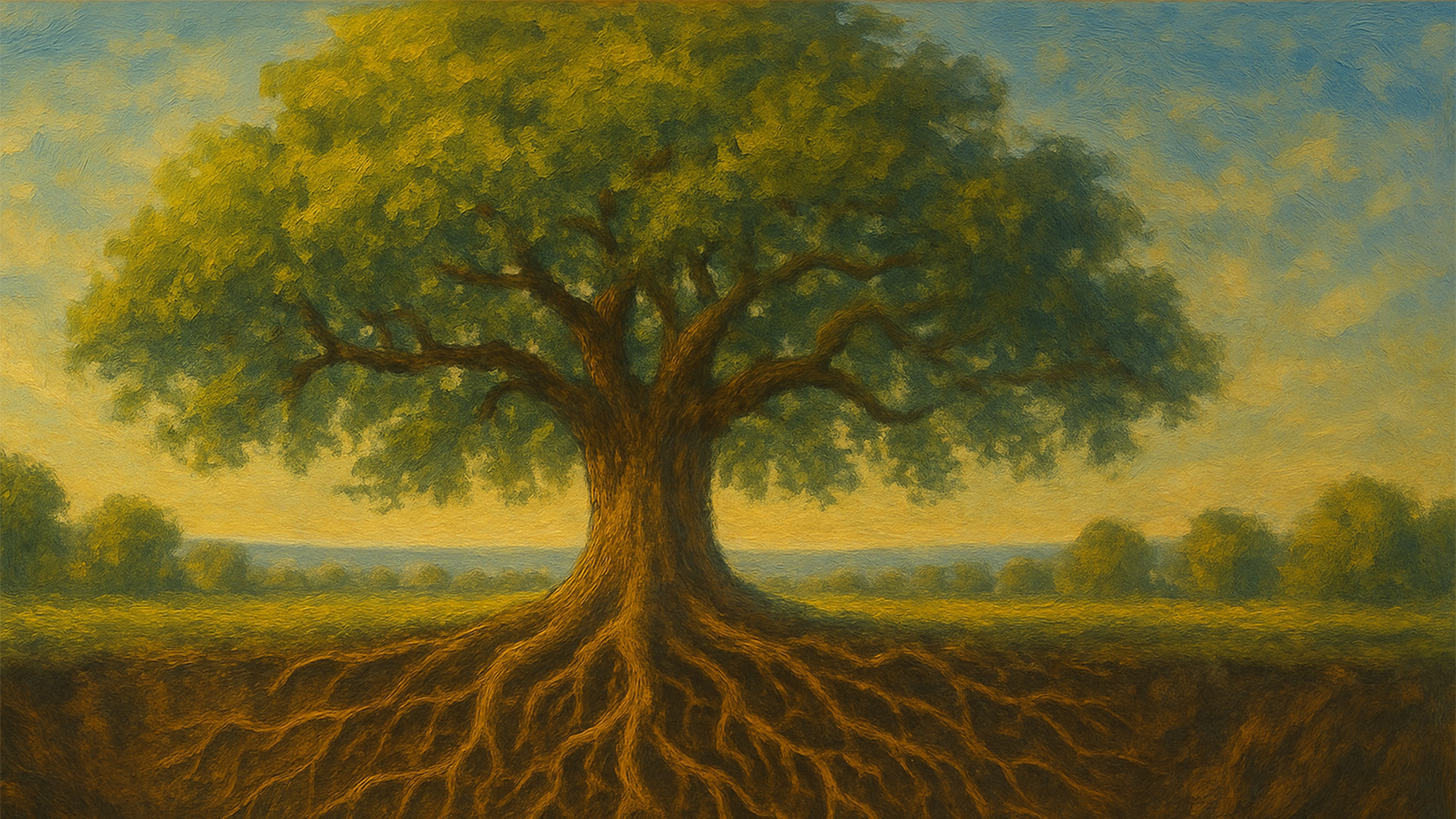
Let us contemplate the words of Moshe Rabbeinu [Our Teacher Moses]. He did not suffice with rebuking them for being ingrates; he clarified the source of this trait—they had inherited it from Adam HaRishon [the First Man]. But this requires understanding: So many generations had passed between Adam and the Dor HaMidbar [Generation of the Wilderness]. Would it not be more straightforward to attribute the sin of ingratitude to the people themselves and their own shortcomings?
Why did Moshe have to trace the fault all the way back to Adam and say that he was the root of the problem?
Indeed, we find a similar approach regarding the Dor HaPalagah [Generation of the Dispersion], where it says (Bereishis 11:5), ‘And Hashem [God] descended to see the city and the tower which the Bnei HaAdam [Children of Man] had built.’
Rashi writes, “Bnei HaAdam” — Whose children, then—donkeys and camels? Rather, the children of Adam HaRishon, who was ungrateful for the good, as he said: ‘The woman whom You gave to be with me…’ These too were ungrateful for the good and rebelled against the One Who had bestowed kindness and saved them from the Mabul [Flood].
This teaches that Hakadosh Baruch Hu [The Holy One, Blessed Be He] revealed that the kefiyat tovah [ingratitude] of the Dor HaPalagah had its root in Adam HaRishon. Even though many generations had passed, the nature and character traits remained and left their imprint. Therefore, Moshe Rabbeinu recognized the same pattern in the Dor HaMidbar: Their lack of gratitude, too, was rooted in the nature inherited from Adam. From here we learn the profound ko’ach hahashpa’ah [power of influence] that avos [forefathers] have over their descendants—even after many generations.
When Hakadosh Baruch Hu sought to choose Avraham Avinu [Our Father Abraham] as the father of the Am Yisrael [Nation of Israel], He tested him with asarah nisyonos [ten trials]. At first glance, this seems puzzling. Was it not enough that he recognized his Borei [Creator] at the age of three? That he stood firm against the avodah zarah [idolatry] of his father’s house? Why were all these additional trials necessary?
The Sefas Emes explains, ‘When a person overcomes a nisayon [trial], he transforms his very essence. He gains strength and resilience for future tests—not only for himself but for all his descendants after him. This means that when Avraham successfully endured his trials, he paved the spiritual path and endowed us — his children — with the ability to withstand similar trials.
Just as in the realm of physical nature and genetics, strong and tall parents tend to have strong and tall children, so too in spiritual matters: Parents with strength, fortitude, and unshakable emunah [faith] bequeath those qualities to their children.
The Gaon [Genius] Rabbi Avraham of Vilna (brother of the Gra [the Vilna Gaon, Rabbi Eliyahu ben Shlomo Zalman]) explains that the ten trials of Avraham encompassed every type of challenge a person could encounter: Trials involving one’s guf [body], mammon [wealth], ishto [wife], and banav [children]. From this we learn that we, too, have the strength to endure any kind of test we may face, for we inherited the spiritual might of Avraham Avinu. That strength runs in our very spiritual DNA, and with it we are equipped to persevere.
Excerpted and translated from Hebrew into English from Yam HaTorah by Rabbi Yosef Goldstein, Rabbi and Mussar Lecturer at Diaspora Yeshiva Toras Yisrael, Mount Zion, Jerusalem.
Share This!
From beginner to advanced, if you’re a Jewish man, 18 to 35 years of age, and you’re ready to give your heart to HaShem, and to get serious about learning Torah, Diaspora Yeshiva has a place for you with us on Mount Zion, Jerusalem.
